Family Settlement and Estate Agreements in Qatar: Takharuj, Partition, Documentation, and Dispute Prevention
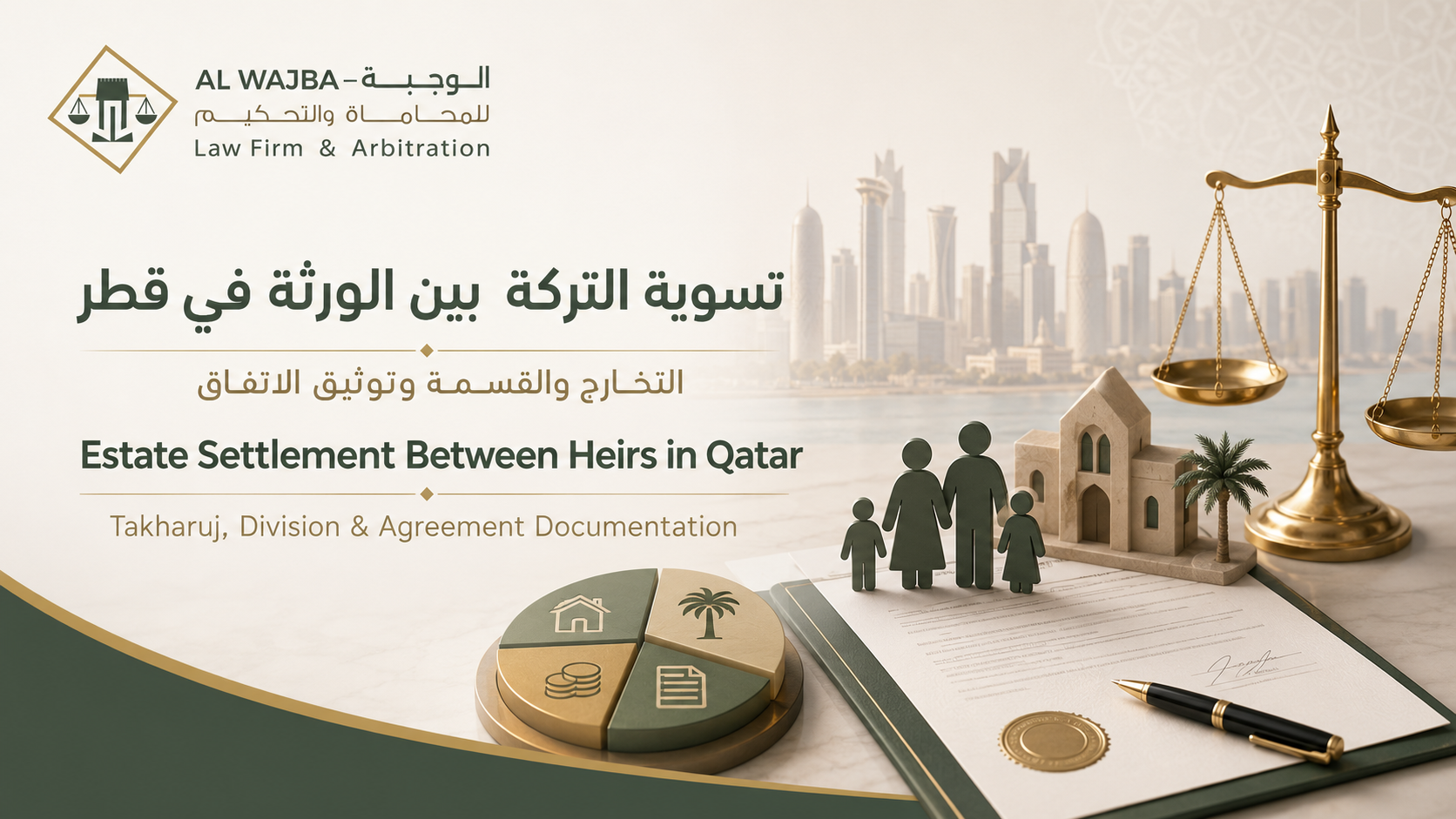
Family Settlement and Estate Agreements in Qatar: Takharuj, Partition, Documentation, and Dispute Prevention
Families often agree on the inheritance shares but still need a practical way to divide a house, company, bank balance or mixed estate. In Qatar, that agreement should be built on a verified heir list, a clear estate inventory, the correct order of estate obligations, reliable values, and a legal structure that matches what the heirs are actually agreeing to do.
This guide explains negotiated estate division, consensual partition and takharuj between heirs. For the calculation and administration sequence itself, see Estate Distribution in Qatar. If the family is already contesting heir status, ownership, a will or asset control, start with Inheritance Disputes in Qatar.
Inheritance guides in Qatar
Explore the main inheritance guide, estate distribution, wills, inheritance disputes, legal support, and related Family Court guidance.
The broad Family Law guide covering divorce, custody, support, marriage documents, inheritance, and Family Court matters in Qatar.
The main guide to inheritance rules, estate distribution, wills, family settlements, and inheritance disputes in Qatar.
Legal support for inheritance disputes, estate distribution, wills, family settlement agreements, and succession issues in Qatar.
A practical guide to Sharia inheritance shares, heirs, estate obligations, assets, debts, wills, valuations, and distribution steps in Qatar.
A guide to disputed heirs, contested estate assets, debts, wills, family disagreements, evidence, settlement, and court options in Qatar.
The general guide to will validity, the one-third rule, wills to heirs, capacity, evidence, revocation, and estate execution in Qatar.
A focused guide for expatriates on nationality rules, foreign wills, Qatar assets, attestation, translation, coordinated wills, and cross-border estate planning.
A guide to settlement between heirs, takharuj, agreed estate division, valuations, documentation, and implementing estate transfers in Qatar.
A related guide to Family Court procedures, required documents, hearings, and case preparation in Qatar.
Legal services for wills, estate distribution, inheritance procedures, and dispute resolution.
What can an estate settlement between heirs actually do?
The legal entitlement and the practical allocation are related but not identical. Several assets can be reorganized so that each heir receives value in a workable form, provided the rights of the parties and third parties are respected.
Distribution according to established inheritance shares
Once the heirs, estate and prior obligations are established, assets can be transferred or divided in accordance with the applicable inheritance shares. This is the baseline against which any negotiated arrangement should be understood.
Agreed partition of jointly owned estate assets
Heirs who become co-owners may agree on a practical division of common property, subject to the law and any protections required for an incapacitated, absent or otherwise specially protected party. The agreement should identify values and any balancing payments clearly.
Takharuj between heirs
Qatar Family Law recognizes takharuj: an agreement under which one or more heirs assign their inheritance shares to other heirs for known consideration. It is a specific legal arrangement, not merely an informal promise to 'give up' an inheritance.
Sale of an asset and distribution of proceeds
Where a house, business interest or other asset cannot be divided sensibly in kind, the family may consider a sale and distribution of the net proceeds. If agreement fails or division in kind would materially reduce value, judicial partition rules may become relevant.
If you are still identifying the applicable heirs, shares and estate obligations, read the broader Inheritance in Qatar guide before negotiating a final allocation.
Four foundations to establish before the heirs negotiate
A settlement is strongest when the family is negotiating from a common factual record rather than from estimates, memories or possession of the assets.
Death and heirship are established
A settlement should not start from assumptions about who the heirs are. Family Law Article 301 provides that takharuj only takes place after death is proved and the heirs are determined.
The estate is distinguished from personal family property
Prepare an asset inventory and identify what actually belonged to the deceased. Jointly registered property, business interests, gifts, nominee arrangements, receivables and disputed ownership may require separate evidence before they can be placed into a settlement.
Estate obligations are dealt with first
Family Law Article 242 places burial expenses, debts and will execution ahead of distribution to heirs. A family agreement should not divide the gross asset pool while ignoring liabilities that legally reduce the estate.
The parties understand values and consequences
Even where the law permits an agreement, informed consent matters in practice. Obtain reliable valuations for material property, companies or unusual assets and document any cash equalization or consideration paid between heirs.
Takharuj under Qatar Family Law
Takharuj has a defined statutory meaning. It should be used carefully because an heir is dealing with an inheritance share, not merely agreeing who will temporarily hold or manage an asset.
Article 299 defines takharuj as an agreement between heirs under which some heirs assign their inheritance shares to other heirs for known consideration.
The same Article states that the judge must explain the estate assets to the assigning heir, reinforcing the importance of understanding what the share relates to before assignment.
If the consideration comes from the estate itself, Article 299 addresses how the assigning heir's shares are removed while the other heirs' shares remain; if the consideration is paid from the other heirs' own property, the agreement should state how the assigned share is divided.
Article 300 allows takharuj even if the estate assets and amount are not fully known, but it also provides a remedy for gross disadvantage where the assigning heir receives more than one fifth less than the value of the inheritance share, subject to the statutory one-year period and the other heirs' right to make up the deficiency.
Article 301 requires death to be proved and the heirs to be determined before takharuj can take place.
What should a family estate agreement record?
The document should be detailed enough that a bank, property registrar, company, court or later adviser can understand the economic result and what remains to be implemented.
Step-by-step: settling and documenting an estate in Qatar
The safest sequence separates fact-finding, legal entitlement, valuation, negotiation and implementation. Trying to do all five at once is a common source of later disagreement.
Confirm the heirs
Collect the death certificate, inheritance certificate and family-status documents needed to establish who participates in the estate. Resolve a disputed heir-status issue before relying on signatures to settle the estate.
Build the estate inventory
List real estate, bank balances, investments, vehicles, company shares, receivables, valuable movables and other rights. Separate confirmed assets from assets whose ownership is disputed or still being investigated.
Identify debts and prior estate rights
Record burial expenses, debts, guarantees, creditor claims and any effective will. Calculate the distributable estate only after the obligations that rank ahead of heirs are addressed.
Calculate the baseline inheritance position
Determine each heir's legal entitlement before negotiating a different practical allocation. A settlement is much safer when every party can compare the proposed outcome with the entitlement being settled or assigned.
Value assets that are not cash
Use appropriate valuation evidence for real estate, companies, vehicles or other material assets. Where parties agree on a value different from a formal appraisal, record that decision expressly rather than leaving the number implicit.
Choose the correct legal structure
Decide whether the result is ordinary distribution, consensual partition, sale and distribution, takharuj, or a combination. The legal form should match the economic deal the family is actually making.
Document and review the settlement
Set out the covered assets, values, payments, releases, conditions and implementation steps in writing. Where capacity, representation, foreign documents, companies or substantial property are involved, obtain legal review before execution.
Complete the transfers
A signed agreement does not itself update every registry or account. Complete the required court, Ministry of Justice, bank, company, vehicle or other transfer procedures and keep evidence that each step was implemented.
Where the issue is mainly implementation rather than negotiation, an inheritance lawyer in Qatar can help review the documentary chain and coordinate the steps required for the assets involved.
How different estate assets affect the settlement
A single agreement may cover several asset classes, but each class has its own valuation and transfer problems. The wording should anticipate those differences.
Real estate
Property often drives estate settlements because heirs may prefer one person to keep a home or investment property while others receive money or different assets. The Ministry of Justice currently provides both inheritance-transfer and inheritance-plus-takharuj transfer services for property, based on the required inheritance and title documentation.
Private companies and shares
Check what the deceased actually owned, the commercial registration, constitutional documents, shareholder arrangements, outstanding loans and any restrictions on transfer. A valuation should distinguish the value of the company from the value of the deceased's legal interest in it.
Bank accounts, cash and investments
These assets can help equalize a settlement, but the parties should distinguish gross balances from amounts subject to debt, security, pending transactions or bank release requirements. Record who receives accrued income and who bears charges during administration.
Receivables, debts and disputed claims
An estate may include money owed to the deceased as well as liabilities owed by the deceased. Do not assign a value to a disputed receivable as though collection were guaranteed, and do not distribute funds without reserving for a credible estate debt that must first be resolved.
Why capacity, absent heirs and creditor rights need separate attention
Protected heirs
Civil Code Article 864 contains special rules for consensual partition where a co-owner lacks capacity or is confirmed absent. Do not assume another family member can sign away or reorganize that person's share without the legally required authority or protection.
Creditors
Estate debts rank ahead of distribution, and the Civil Code also protects creditor involvement in partition in specified circumstances. A settlement should not be designed to move value away from a valid debt or registered right.
Authority to sign
If an heir signs through a guardian, attorney or other representative, verify that the authority covers the specific settlement, assignment or transfer. A general assumption about representation can create problems when the agreement reaches a court, bank or registry.
Warning signs before signing an inheritance settlement
Many estate disputes become harder because the family signed first and tried to reconstruct the facts later. These issues should trigger a closer review.
If one of these issues has already turned into a disagreement over assets, signatures, valuation or entitlement, review the options in Inheritance Disputes in Qatar and consider early legal advice before further transfers occur.
Official sources
These sources provide the statutory inheritance, takharuj, common-property and property-transfer framework discussed in this guide. Service requirements can change, so check the current government page when preparing an actual filing.
Frequently asked questions about estate settlement between heirs in Qatar
These answers are general. The correct structure depends on the heirs, estate assets, debts, legal capacity, ownership records and the exact agreement being proposed.
Can heirs agree to divide an estate differently in Qatar?
Heirs may be able to reach agreed arrangements after their rights and the estate are established, but the legal form matters. The arrangement may involve consensual partition of jointly owned property, sale and distribution, or takharuj where an heir assigns an inheritance share to another heir for consideration. Estate debts, capacity issues and formal transfer requirements still have to be respected.
What is takharuj in Qatar inheritance law?
Under Article 299 of Qatar Family Law, takharuj is an agreement between heirs under which some heirs assign their inheritance shares to other heirs for known consideration. The law contains specific rules on the consideration, the assigned share, disclosure of estate assets and when the arrangement can occur.
Can an heir give up an inheritance share without knowing the estate value?
Article 300 states that takharuj may be valid even if the estate assets and amount are not known. However, the same Article provides a remedy for gross disadvantage where the consideration falls more than one fifth below the inheritance share, subject to the statutory conditions and one-year period. In practice, valuation and disclosure reduce avoidable disputes.
Can heirs sign a takharuj agreement before the person dies?
No. Article 301 states that takharuj does not take place until death is proved and the heirs are determined. Estate planning during life is a different legal exercise from a post-death agreement among heirs.
Do estate debts have to be paid before the heirs settle the estate?
Estate obligations cannot simply be ignored. Article 242 of Qatar Family Law places burial expenses, debts and will execution before distribution of the remaining estate to heirs. A settlement should therefore identify liabilities and reserves before treating the balance as distributable.
Can one heir keep the family house and pay the others?
That can be a possible settlement structure where the legal and factual conditions are satisfied. The parties should establish the inheritance shares, agree or obtain a defensible property value, state the balancing payments clearly, and complete the required property-transfer process rather than relying only on a private understanding.
What if one heir refuses to agree to the proposed division?
A consensual settlement should not be treated as unanimous if a required party does not agree. Depending on the asset and dispute, judicial partition or other court proceedings may be necessary. The Civil Code provides procedures for division of common property when co-owners contest partition and for sale where division in kind is not practical or would materially reduce value.
What if a minor or incapacitated heir is involved?
Do not rely on an ordinary family signature process. Qatar's partition rules include protections where a co-owner lacks capacity, and representation or court requirements may apply. Obtain advice on the correct authority and approval process before binding or transferring the protected person's share.
Does a family settlement automatically transfer property or bank accounts?
No. The agreement records the parties' arrangement, but registries and institutions may require separate documents and approvals. Real estate, bank accounts, company shares and other registered assets should be followed through until the ownership record or account has actually been updated.
When should heirs involve an inheritance lawyer?
Legal review is especially useful where the estate includes real estate, companies, foreign assets, substantial debts, a disputed will, uncertain ownership, minors, absent parties, unequal proposed allocations or a takharuj payment. Early review can help the family choose the correct structure before signatures and transfers make a mistake harder to reverse.
Need help documenting an estate agreement between heirs?
A useful review should connect the inheritance certificate, legal shares, estate inventory, debts, valuations, proposed allocation, any takharuj consideration, representation issues and the practical transfer steps for each asset. The aim is a settlement that can be understood and implemented, not just signed.
Office hours: Saturday–Thursday: 9:00 AM – 5:00 PM. Bring the inheritance certificate, identity documents, title and account records, company documents, debt information, valuations, any will, and any draft settlement or payment record already exchanged between the heirs.
This guide provides general legal information about inheritance settlement in Qatar and is not a substitute for advice on the facts and documents of a particular estate.
About the Author
Written by Ms. Lolwa Al-Thani — Founder & CEO — Qatari Lawyer. A pioneering Qatari lawyer with 20+ years of experience in Qatari law and Islamic Sharia, and founder of Al-Wajba Law Firm.
Need Legal Consultation?
Our team of specialized lawyers is ready to assist you with all your legal matters.
Contact Us Now