Inheritance in Qatar: Guide to Heirs, Estate Distribution, Wills, Documents, and Family Disputes
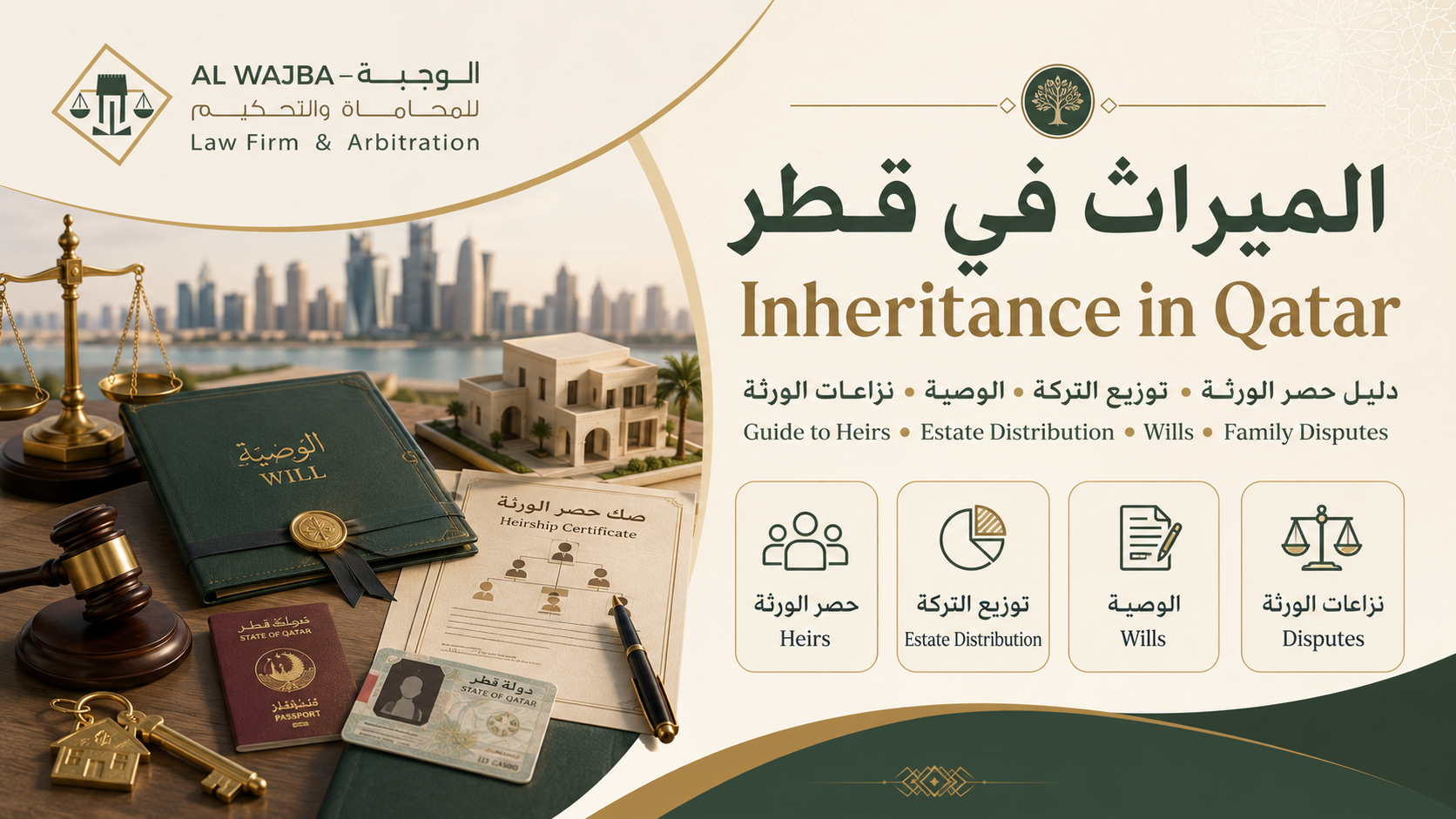
Inheritance in Qatar: Guide to Heirs, Estate Distribution, Wills, Documents, and Family Disputes
Inheritance in Qatar is governed through a Sharia-based framework set out in Qatar Family Law. In practice, an estate may require identifying heirs, confirming family relationships, listing assets, dealing with burial expenses and debts, reviewing any will, determining inheritance entitlements, transferring property, and resolving disputes between family members.
This guide explains how to prepare for inheritance and estate matters in Qatar, including required documents, family relationship proof, estate inventories, foreign probate documents, wills, family settlements, and court issues connected with Family Court in Qatar, Marriage and Family Documents in Qatar, and wider Family Law in Qatar.
Related Family Law Pages
Explore related Qatar family law guides and legal service pages connected to inheritance, family court, marriage documents, divorce, custody, support, and family legal advice.
The broad Family Law guide covering divorce, custody, support, marriage documents, inheritance, and Family Court matters in Qatar.
The main guide to inheritance rules, estate distribution, wills, family settlements, and inheritance disputes in Qatar.
Legal support for inheritance disputes, estate distribution, wills, family settlement agreements, and succession issues in Qatar.
A practical guide to Sharia inheritance shares, heirs, estate obligations, assets, debts, wills, valuations, and distribution steps in Qatar.
A guide to disputed heirs, contested estate assets, debts, wills, family disagreements, evidence, settlement, and court options in Qatar.
The general guide to will validity, the one-third rule, wills to heirs, capacity, evidence, revocation, and estate execution in Qatar.
A focused guide for expatriates on nationality rules, foreign wills, Qatar assets, attestation, translation, coordinated wills, and cross-border estate planning.
A guide to settlement between heirs, takharuj, agreed estate division, valuations, documentation, and implementing estate transfers in Qatar.
A related guide to Family Court procedures, required documents, hearings, and case preparation in Qatar.
Legal services for wills, estate distribution, inheritance procedures, and dispute resolution.
Inheritance-focused guide
Covers heirs, estate distribution, wills, debts, settlements, family documents, and disputes.
Based on official Qatar sources
Built around Qatar Family Law, inheritance provisions, Family Court information, and attestation routes.
Document checklist
Helps organize death, identity, family, asset, debt, will, property, company, and foreign documents.
Useful for expats
Addresses nationality, foreign wills, overseas probate, cross-border assets, translation, and attestation.
What inheritance in Qatar may involve
Inheritance matters are document-heavy and often sensitive. A clear estate file can reduce conflict and help heirs understand the practical steps before distribution.
Inheritance rules and heirs
Inheritance may involve identifying the deceased, the heirs, the estate, legal shares, family relationships, marriage status, children, parents, spouses, and other relatives.
Estate documents and asset records
Estate work usually depends on organized death certificates, identity records, family documents, property records, bank documents, debts, and any will or settlement papers.
Wills and testament issues
Wills can affect estate planning, foreign-nationality issues, asset distribution, family expectations, and the evidence needed before an authority or court.
Family settlement agreements
Some inheritance matters can be resolved by a documented family settlement where heirs agree on distribution, asset transfer, sale, or management of family property.
Inheritance disputes
Disputes may arise over who qualifies as an heir, missing documents, asset control, debts, foreign wills, family businesses, real estate, or refusal to cooperate.
Expat and cross-border inheritance
Inheritance for expats can involve nationality law, assets in Qatar and abroad, foreign probate or heirship documents, attestation, translation, and court recognition issues.
Which inheritance issue should you start with?
The right starting point depends on whether the matter is about heirs, documents, estate assets, wills, court disputes, foreign documents, or family settlement.
| Situation | Start here | Legal focus |
|---|---|---|
| A family member died and assets are in Qatar | This guide | Death certificate, heirs, estate assets, bank accounts, real estate, debts, family documents, and court or authority route. |
| We need to identify heirs and their shares | This guide | Family relationships, marriage status, children, parents, siblings, fixed shares, documentation, and possible disputes. |
| There is a will or foreign estate document | Marriage and Family Documents in Qatar | Will review, foreign document legalization, attestation, translation, nationality issues, and use before Qatari authorities. |
| The inheritance dispute is going to court | Family Court in Qatar | Court filing, evidence, family documents, estate records, hearings, settlement, judgments, and enforcement. |
| The estate involves divorce, spouse rights, or children | Family Law in Qatar | Marriage status, divorce status, children, guardianship, custody, support obligations, and family relationship documents. |
| We need legal help with estate distribution | Family Lawyer in Qatar | Case strategy, heir documents, estate inventory, settlement, court filing, foreign documents, enforcement, and risk review. |
Inheritance process in Qatar: practical preparation steps
The exact legal path depends on the family, nationality, assets, documents, and whether heirs agree. These steps help prepare the estate file before settlement or court action.
Confirm the death record and basic family information
Start with the death certificate, identity documents, nationality, religion, marital status, children, parents, spouse, and known relatives of the deceased.
Identify the heirs and family relationships
Prepare family records showing spouse, children, parents, siblings, and other relatives. Marriage, divorce, birth, and death documents may be needed to prove relationships.
Prepare an initial estate inventory
List known assets and liabilities, including bank accounts, real estate, vehicles, business interests, shares, debts, loans, rent, insurance, and valuables.
Check whether there is a will or foreign estate document
Review any will, foreign probate document, heirship certificate, family agreement, power of attorney, or document showing asset ownership or intended distribution.
Review applicable law and cross-border issues
For expat estates, nationality, foreign law, local assets, foreign documents, and attestation requirements may affect the inheritance route and evidence needed.
Organize evidence before court or settlement
Collect identity, family, financial, property, debt, corporate, and foreign documents. Translate and attest foreign documents where required.
Assess settlement, distribution, or dispute strategy
Where heirs agree, a family settlement may help. Where they disagree, the issue may need court action, asset protection, evidence preparation, or enforcement planning.
Plan transfer, enforcement, and post-distribution steps
After distribution or judgment, heirs may still need asset transfer, bank release, property sale, business updates, tax or foreign steps, and compliance records.
Documents commonly needed for inheritance in Qatar
Inheritance files depend on proof of death, proof of heirs, proof of assets, proof of debts, and any will or foreign estate document that may affect distribution.
Estate assets and debts to identify
A clear estate inventory helps heirs understand what must be preserved, valued, transferred, sold, paid, or disputed.
Real estate
Land, villas, apartments, rental properties, property income, title documents, leases, mortgage documents, and valuation records.
Bank and financial assets
Bank accounts, deposits, investments, shares, dividends, insurance proceeds, receivables, and financial statements.
Businesses and commercial interests
Company shares, commercial registrations, partnership interests, business accounts, contracts, receivables, and management rights.
Debts and estate obligations
Loans, guarantees, unpaid invoices, creditor claims, funeral expenses, maintenance obligations, and documented liabilities.
Common inheritance disputes in Qatar
Inheritance disputes often arise when documents are incomplete, assets are controlled by one person, a will is unclear, or heirs disagree about distribution.
Disagreement over who is an heir
Disputes may involve marriage status, divorce status, children, missing relatives, half-siblings, parents, prior marriages, or foreign family documents.
Disagreement over estate assets
Heirs may disagree about what belongs to the estate, whether assets were transferred before death, or whether a business or property is being controlled unfairly.
Disagreement over a will or settlement
A will, handwritten note, foreign probate document, family settlement, or promised transfer may need legal review before it is relied on.
Refusal to cooperate
An heir, relative, business partner, tenant, or account holder may refuse to share records, sign transfer documents, disclose assets, or comply with an agreement.
Family settlement agreements for inheritance
If heirs agree, a settlement can help avoid a long dispute. The agreement should be clear, complete, and practical enough to implement with banks, property authorities, companies, or courts.
Identify all heirs before signing
A settlement can create future problems if an heir is missing, a family relationship is not verified, or a foreign heirship document has not been reviewed.
List assets and debts clearly
The agreement should identify the assets, liabilities, distributions, payment timing, property transfers, sale terms, and who will complete each step.
Address real estate and business control
Family property and businesses often require clear management, sale, valuation, voting, signature, and income-distribution terms.
Plan documentation and execution
A settlement should consider notarization, powers of attorney, translations, attestations, authority forms, court steps, and transfer records.
How inheritance connects with family documents and family court
Inheritance rarely depends only on asset documents. Family status, marriage records, divorce history, children’s documents, and court procedure may all matter.
Family relationship documents
Marriage, divorce, birth, death, and relationship documents may be needed to prove heirs. See Marriage and Family Documents in Qatar.
Court disputes
Disputed heirs, estate assets, wills, and enforcement issues may require court preparation. See Family Court in Qatar.
Broader family law issues
Divorce, children, spouse rights, and prior family settlements may affect estate strategy. See Family Law in Qatar.
Inheritance in Qatar for expats and cross-border families
Expat inheritance matters can be more complex because nationality, foreign documents, wills, overseas assets, and assets in Qatar may need to be coordinated carefully.
Nationality and applicable law
For non-Qatari estates, nationality and foreign law may affect inheritance, wills, guardianship, and the evidence needed for assets located in Qatar.
Foreign probate or heirship documents
Documents issued abroad may need legalization, attestation, Arabic translation, and review before being used with a Qatari court, bank, or authority.
Assets in more than one country
A deceased person may have assets in Qatar and abroad. Coordinating documents and legal steps across countries can prevent inconsistent claims.
Minor children or guardianship concerns
Where children inherit or need protection, guardianship, custody, school, residence, and asset-management arrangements should be reviewed carefully.
For will-specific planning, use Wills in Qatar for the general testamentary rules and Wills in Qatar for Expats for nationality, foreign wills, Qatar assets, and coordinated cross-border planning.
Need help with inheritance or estate distribution in Qatar?
Legal review can help identify heirs, organize estate documents, review wills, prepare settlement terms, handle foreign documents, and plan court or enforcement steps where the matter is disputed.
Common mistakes in inheritance matters
Inheritance problems often become harder when heirs distribute assets too early, fail to document settlement terms, ignore debts, or rely on incomplete foreign documents.
Official sources and useful references
These sources are useful starting points for Qatar inheritance rules, Family Court jurisdiction, estate liquidation concepts, foreign-document issues, attestation, and cross-border family guidance.
Frequently asked questions about inheritance in Qatar
These answers are general. Inheritance matters are fact-sensitive, especially where foreign documents, disputed heirs, minors, wills, business assets, or cross-border estates are involved.
How does inheritance in Qatar work?
Inheritance in Qatar usually starts by confirming the death record, identifying the heirs, listing the estate assets and debts, reviewing any will or foreign document, and deciding whether the matter can be settled or needs court involvement. The correct route depends on family status, nationality, documents, assets, and whether there is a dispute.
What documents are needed for inheritance in Qatar?
Useful documents may include the death certificate, IDs and passports, marriage and divorce documents, children’s birth certificates, heir relationship documents, wills, foreign probate papers, bank records, property documents, company records, debt documents, powers of attorney, translations, and attestations.
Which court handles inheritance disputes in Qatar?
Inheritance disputes may fall within the Family Court framework in Qatar, depending on the type of issue and dispute. Where the matter involves family relationships, heirs, estate distribution, or related family claims, court-route review may be needed.
Can inheritance be settled by agreement between heirs?
In some cases, heirs may resolve the matter through a documented family settlement. The agreement should identify all heirs, list assets and debts, explain distribution, address property or business transfers, and clarify implementation steps.
What happens if there is a will?
A will should be reviewed carefully for form, applicable law, asset location, heirs, foreign elements, and whether supporting documents, translation, attestation, or court steps are needed. A will does not remove the need to identify estate assets and heirs.
How are foreign inheritance documents used in Qatar?
Foreign probate papers, heirship certificates, wills, death certificates, or court documents may need legalization, attestation, and Arabic translation before they can be used in Qatar. The required route depends on the issuing country and the receiving authority.
What if heirs disagree about the estate?
Disputes may involve who qualifies as an heir, whether assets belong to the estate, whether a will is valid, whether debts should be paid first, or whether one person is controlling assets unfairly. Evidence and document review are important before filing or negotiating.
Do debts need to be considered before distributing inheritance?
Yes. Estate debts, funeral expenses, loans, guarantees, creditor claims, and other liabilities should be reviewed before distribution. Ignoring debts can create disputes and later claims against heirs or estate assets.
Can expats have inheritance issues in Qatar?
Yes. Expat inheritance matters can arise where the deceased lived in Qatar, owned assets in Qatar, had bank accounts, held company shares, had family members in Qatar, or left foreign wills or probate documents that must be used locally.
Do I need an inheritance lawyer in Qatar?
A lawyer is recommended when heirs disagree, assets are significant, documents are foreign, there is a will, minors are involved, assets are being controlled by one person, debts are unclear, or court or authority steps are needed.
Need to organize an inheritance file or resolve an estate dispute?
A structured review can help clarify heirs, documents, estate assets, debts, settlement options, foreign-document issues, and whether court action is needed.
Office hours: Saturday–Thursday: 9:00 AM – 5:00 PM. Before requesting review, prepare the death certificate, IDs, family relationship documents, any will or foreign probate documents, asset records, debt documents, and a short family tree.
About the Author
Written by Ms. Lolwa Al-Thani — Founder & CEO — Qatari Lawyer. A pioneering Qatari lawyer with 20+ years of experience in Qatari law and Islamic Sharia, and founder of Al Wajbah Law Firm.
Need Legal Consultation?
Our team of specialized lawyers is ready to assist you with all your legal matters.
Contact Us Now