QFC Company Formation in Qatar: Complete Guide for Investors
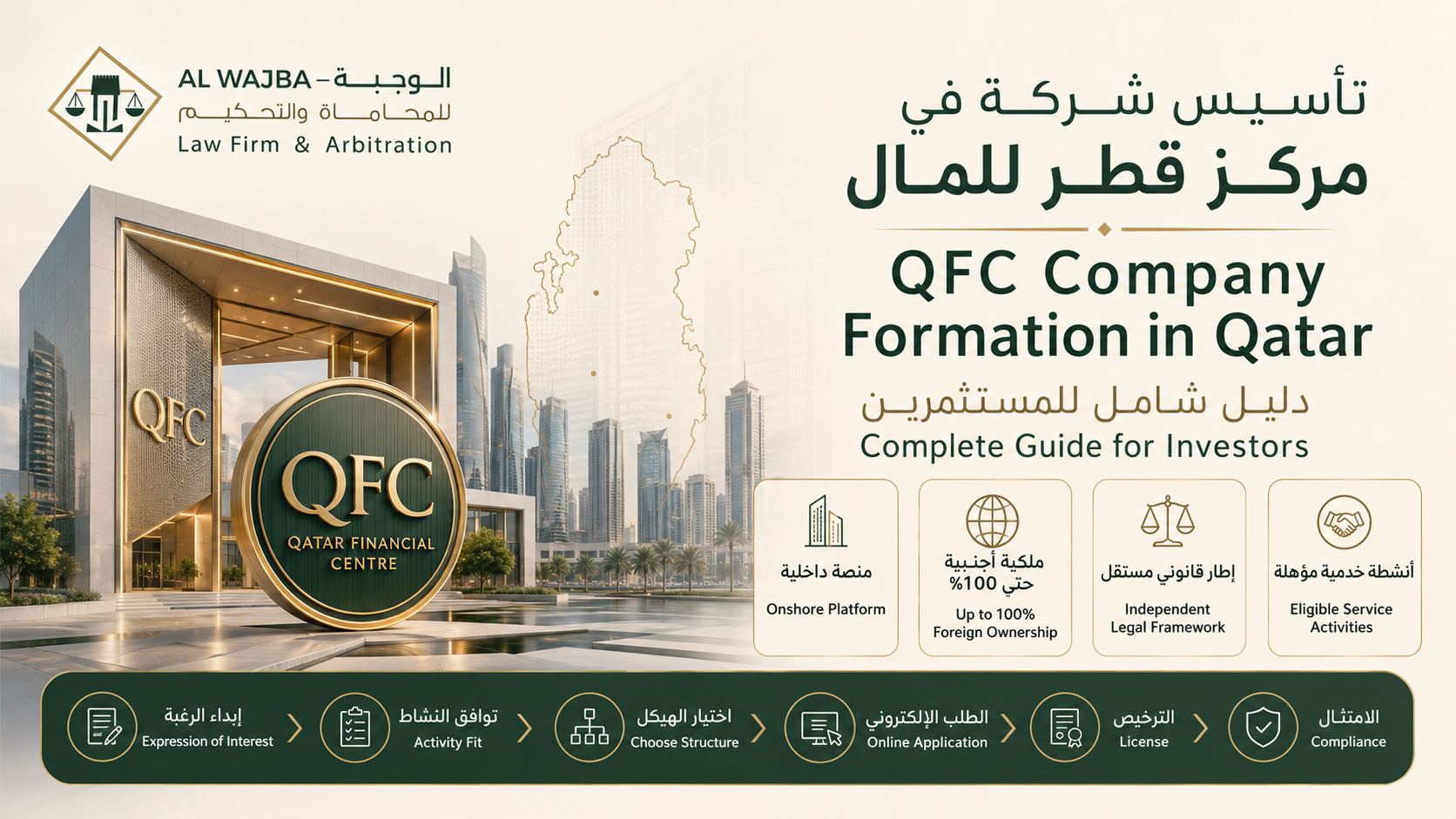
QFC Company Formation in Qatar: Complete Guide for Investors
QFC company formation in Qatar can be a strong route for eligible professional services, consulting, financial services, technology, holding, headquarters, and selected service businesses. This guide explains what the Qatar Financial Centre is, who it suits, the setup process, required documents, costs, tax and compliance points, and when legal review is important before applying.
Related Company Formation Guides and Services
Explore related guides and legal services for company formation in Qatar.
The main guide covering company types, setup process, documents, costs, and Qatar formation routes.
End-to-end setup support for registration, documents, licensing, tax, and launch readiness.
Legal structuring, shareholder agreements, Articles of Association, risk review, and compliance.
A detailed comparison of LLCs, shareholding companies, branches, representative offices, and other structures.
A focused guide for limited liability company setup in Qatar.
A focused guide for eligible businesses setting up through Qatar Financial Centre.
A focused guide for businesses considering Qatar Free Zones.
A focused guide for foreign companies opening a branch in Qatar.
A focused guide for foreign companies opening a commercial representation office.
Corporate legal advice for contracts, governance, compliance, and business operations.
Quick answer: what is QFC company formation?
QFC company formation is the process of registering and licensing an eligible business under the Qatar Financial Centre, an onshore framework in Doha with its own legal, regulatory, tax, and business environment.
- QFC is best considered when the proposed business activity fits QFC permitted activities.
- The process normally starts with an expression of interest, followed by an online application for registration and license.
- A QFC LLC is a common structure, but the right structure depends on activity, ownership, liability, and regulatory status.
- Regulated financial services may require QFC Regulatory Authority involvement before approval.
- After incorporation, QFC firms must comply with their Scope of License and post-registration filing requirements.
Qatar Financial Centre Setup for Eligible Businesses
A practical setup route for selected local and international firms operating in or from Qatar.
Best for
Eligible professional, consulting, financial, technology, holding, headquarters, and selected service activities.
Main advantage
An onshore Qatar platform with up to full foreign ownership and an independent legal and business framework.
Key risk
Applying before confirming the activity, regulatory status, and Scope of License requirements.
Why Investors Choose QFC Company Formation
QFC can be attractive when the business is eligible and the structure supports the investor's ownership, tax, governance, regulatory, and operational goals.
Onshore Qatar Platform
QFC is an onshore business and financial centre in Doha. It is not the same as a free zone and it is not the same as ordinary mainland company formation.
Up to 100% Foreign Ownership
QFC can be attractive for foreign investors because the official QFC framework permits registered firms up to full foreign ownership, subject to the approved activity and license.
Independent Legal Framework
QFC operates with its own legal, regulatory, tax, and business environment, with a commercial legal system based on English common law principles.
QFC Tax Environment
QFC materials describe a competitive tax system, including corporate tax on locally sourced profits and access to QFC tax registration, tax return, and ruling processes.
Suitable Service Activities
QFC is commonly considered for eligible professional services, consulting, financial services, holding, headquarters, technology, and selected service activities.
Centralized Application Route
The QFC process starts with activity alignment, then moves through the online registration and licensing application before certificates and the Scope of License are issued.
Who Is QFC Company Formation Suitable For?
The first question is not whether QFC is popular. The first question is whether your proposed activity fits the QFC licensing framework and whether QFC is commercially better than mainland or free-zone setup.
| Activity area | Examples | Practical note |
|---|---|---|
| Professional Services and Consultancy | Management consulting, HR consulting, tax consulting, education consulting, project management, and other eligible advisory services | Often a strong QFC fit when the activity is service-based and falls within the QFC permitted-activity framework. |
| Technology and Digital Services | Computer programming, IT consultancy, data processing, web portals, information services, and selected technology activities | The exact activity should be mapped to the QFC activity list before drafting the application. |
| Regulated Financial Services | Banking, asset management, insurance, reinsurance, Islamic finance, and selected alternative finance activities | These may require QFC Regulatory Authority authorization before the licensing process can move forward. |
| Holding, Headquarters, and Management Offices | Group holding, company headquarters, management office, administrative support, and intra-group treasury operations | QFC can be useful for group structures, but legal, tax, and substance requirements should be reviewed carefully. |
| Legal, Accounting, IP, and Corporate Services | Legal services, auditing, accountancy, intellectual property activities, company service providers, and related professional activities | Some professional services may require extra approvals, credentials, or QFC-approved service-provider status. |
| Not Every Business Activity | Retail shops, restaurants, unrestricted local trading, industrial manufacturing, and activities outside QFC's permitted scope | Businesses focused on direct local-market trading or physical premises operations may need mainland or another route instead. |
QFC Company Formation Process
Confirm whether QFC is the right route
Start by comparing QFC with mainland and Qatar Free Zone setup. QFC is best considered when the activity fits QFC's permitted-activity framework and the business model benefits from the QFC environment.
Submit an expression of interest
The QFC process begins with an expression of interest through the official Start Your Setup route. The business activity and strategic fit are reviewed before the full application stage.
Map the activity to QFC permitted activities
The proposed activity should be matched to the QFC activity categories. Regulated financial services may require involvement from the QFC Regulatory Authority before proceeding.
Choose the QFC legal structure
Many applicants use a QFC LLC, but the right structure depends on ownership, liability, management, tax, regulatory status, and long-term business plans.
Prepare the application and documents
Prepare ownership information, beneficial ownership details, governance documents, director and secretary details, shareholder documents, business activity information, and supporting materials.
Complete the online application
After activity alignment, the applicant completes the online application for registration and license through the QFC portal and responds to any follow-up requests.
Receive certificates and Scope of License
Once approved, the QFC issues the licensing and registration certificates, the entity's Scope of License, and the licensing letter.
Complete post-registration obligations
After incorporation, the business should handle tax registration, employment-related registration where applicable, annual returns, accounts, UBO filings, and any event-driven filings.
QFC vs Mainland vs Qatar Free Zone Company Setup
QFC is one route within Qatar's wider company formation landscape. It should be compared with mainland and free-zone setup before documents are prepared.
| Route | Authority route | Usually best for | Ownership note | Key caution |
|---|---|---|---|---|
| QFC Company Formation | Qatar Financial Centre Authority / CRO, with QFCRA involvement for regulated financial services | Eligible professional services, consulting, financial services, tech, holding, headquarters, and selected service activities | Up to 100% foreign ownership may be available under the QFC framework | The activity must fit QFC permitted activities and the firm must comply with its Scope of License. |
| Mainland Company Formation | Usually MOCI and other competent authorities depending on activity | Businesses needing direct local market operations, trading, local commercial licensing, retail, contracting, or ordinary Qatar commercial presence | Depends on the activity, legal structure, and applicable foreign investment rules | May involve different ownership, licensing, municipal, premises, and sector approval requirements. |
| Qatar Free Zone Company Setup | Qatar Free Zones Authority | Eligible logistics, manufacturing, trade, warehousing, industrial, technology, and export-oriented projects | Depends on free-zone approval, project type, and applicable free-zone rules | Not automatically suitable for every company that wants unrestricted local-market operations in Qatar. |
Documents Required for QFC Company Formation
QFC setup document checklist
The exact documents depend on the activity, structure, shareholders, regulatory status, and whether foreign corporate documents are involved. Use this list as a practical starting point.
- Passport copy or QID for individual shareholders, directors, secretary, senior executive function holder, and authorized persons as applicable
- Corporate shareholder documents where a company will own shares in the QFC entity
- Ownership-chain information and ultimate beneficial owner details
- Business activity description and explanation of how the activity fits QFC permitted activities
- Proposed legal structure, shareholding percentage, governance structure, and management roles
- Draft constitutional documents, Articles, resolutions, powers of attorney, or authorizations where required
- Registered office or QFC-approved premises information when required by the selected structure
- Professional qualification, regulated-activity, or sector approval documents where applicable
- QFC Regulatory Authority materials where the proposed activity is regulated financial services
- Foreign-issued documents that may need certification, legalization, translation, or corporate approval evidence
How Much Does QFC Company Formation Cost?
QFC setup costs vary by activity, legal structure, regulatory status, document complexity, office needs, and post-registration support. A fixed price should not be assumed until the activity and route are confirmed.
QFC activity and license category
Regulated and non-regulated activities can involve different application, review, documentation, and compliance requirements.
Legal structure
A QFC LLC, branch, special purpose company, holding company, or other structure can involve different requirements and legal consequences.
Document preparation
Costs may include drafting, corporate resolutions, powers of attorney, shareholder documentation, translation, legalization, and professional review.
Regulatory authorization
Financial services and other regulated activities may require QFCRA-related review, advice, policies, controls, and compliance documentation.
Registered office and operations
QFC entities may need a registered office in QFC-approved premises and practical operating arrangements after incorporation.
Post-registration compliance
Budget for accounting, audit where applicable, tax filings, annual returns, UBO reports, employment-related filings, and event-driven filings.
When Legal Review Matters for QFC Setup
QFC setup is not only an administrative application. Legal review helps protect the founder, shareholder, parent company, and operating team before the entity is registered.
Route Selection
Confirm whether QFC is better than mainland, Qatar Free Zones, branch, representative office, or another structure for the specific business model.
Scope of License Review
The company should only conduct activities within its approved Scope of License. Any mismatch can create compliance risk.
Ownership and Control
Review shareholder rights, director powers, senior executive function requirements, signatory authority, and decision-making rules.
Regulatory Risk
Identify whether the activity is regulated, whether QFCRA authorization is needed, and what policies or approvals may be required.
Tax and Substance Planning
Review QFC tax, locally sourced profit issues, filings, operating substance, accounting, audit, and advance-ruling questions where relevant.
Post-Formation Compliance
Plan annual returns, accounts, UBO reports, changes in directors, registered office updates, license amendments, and other CRO filings.
Common QFC Company Formation Mistakes to Avoid
- Assuming QFC is available for every business activity without checking the permitted-activity framework
- Treating QFC as a free zone rather than an onshore business and financial centre with its own framework
- Ignoring the Scope of License after incorporation and conducting activities outside the approved scope
- Starting the application before ownership, beneficial ownership, director, secretary, and senior executive function details are ready
- Assuming all financial services activities are simple non-regulated activities
- Choosing a QFC LLC without reviewing whether another QFC structure or another Qatar route is more appropriate
- Forgetting post-registration obligations such as annual returns, accounts, UBO reports, tax registration, and employment-related filings
- Using generic incorporation documents without checking manager powers, shareholder rights, signing authority, and future exit rules
- Assuming QFC tax treatment is the same for every transaction without reviewing locally sourced profit and activity-specific facts
- Not checking whether professional services require additional approvals, qualified persons, or QFC-approved service-provider status
Post-Registration Compliance for QFC Firms
Operate within the Scope of License
The firm should conduct only the activities approved in its Scope of License unless it applies for and obtains an amendment.
Maintain annual filings
QFC firms may need annual returns, accounts, UBO reports, and notifications for changes in directors, secretary, registered office, or other corporate details.
Plan tax and employment steps
After registration, QFC firms should complete tax registration, employment-related registration where applicable, tax returns, and other portal-based requirements.
Official QFC Sources and Authorities
QFC company formation should be checked against official QFC materials, the current permitted-activity framework, and the requirements that apply to the selected structure and activity.
QFC – Overview
QFC – Benefits
QFC – Registering a Company
QFC – What We License
QFC – Application Process
QFC – Limited Liability Companies
QFC – Registration and CRO
QFC – Post-Registration Compliance
QFC – Tax
QFC – Laws and Regulations
QFC Company Formation in Qatar FAQ
What is QFC company formation in Qatar?
QFC company formation is the process of setting up a company or registered presence under the Qatar Financial Centre framework. QFC is an onshore business and financial centre in Doha with its own legal, regulatory, tax, and business environment for eligible activities.
Is QFC the same as mainland company formation?
No. QFC is a separate onshore framework with its own registration, licensing, permitted-activity, tax, and compliance rules. Mainland company formation usually follows the standard commercial registration and licensing route through the relevant Qatari authorities.
Is QFC a free zone?
No. QFC is an onshore business and financial centre. Qatar Free Zones are a different route for eligible free-zone projects, often involving logistics, manufacturing, trade, technology, or export-oriented operations.
Can foreigners own 100% of a QFC company?
QFC official materials state that registered firms may have up to 100% foreign ownership. The exact position still depends on the selected activity, legal structure, licensing requirements, and approval of the application.
What activities can be licensed by QFC?
QFC licenses a range of regulated and non-regulated activities. Examples include financial services, professional services, advisory and consultancy, IT consultancy, fintech, headquarters, holding, management office, legal services, accounting, IP, and other eligible activities. The exact activity should be checked against the current QFC permitted-activity framework.
What is the usual QFC application process?
The process usually starts with an expression of interest, followed by activity alignment, the online application for registration and license, review of supporting documents, and issuance of the registration and licensing certificates, Scope of License, and licensing letter once approved.
What documents are required for QFC company formation?
Common documents include shareholder and director identification, corporate shareholder documents, ownership-chain and beneficial ownership details, business activity information, governance documents, registered office information, and any regulated-activity materials required for the selected activity.
Does a QFC LLC have a minimum share capital requirement?
QFC materials state that there is no minimum share capital for an LLC conducting Non-Regulated Permitted Activities, and the share capital may be in any currency acceptable to the CRO. Regulated activities and special structures should be reviewed separately.
What happens after a QFC company is incorporated?
After registration, the firm should complete tax registration and relevant operational steps, comply with its Scope of License, submit required annual filings, maintain accounts, file UBO reports, and notify the CRO of relevant corporate changes when required.
Do I need a lawyer for QFC company formation?
Legal review is strongly recommended when the structure involves multiple shareholders, a foreign corporate shareholder, regulated activities, tax or holding-company planning, investor rights, manager powers, shareholder agreements, or uncertainty about whether QFC is the correct route.
Need Help With QFC Company Formation in Qatar?
We can help you assess whether QFC is the right route, review the proposed activity, prepare the legal documents, structure ownership and signatory powers, and reduce compliance risk before the application is filed.
About the Author
Written by Mr. Arqam Abdelqader — Sudanese Lawyer in Qatar. A Sudanese lawyer registered with the Sudanese Bar Association and the Qatari Ministry of Justice, with legal experience in Sudan, Kuwait, and Qatar. He specializes in family, criminal, corporate, and labor law.
Need Legal Consultation?
Our team of specialized lawyers is ready to assist you with all your legal matters.
Contact Us Now