Company Formation in Qatar: Complete Guide for Investors and Founders

Company Formation in Qatar: Complete Guide for Investors and Founders
Company formation in Qatar starts with choosing the right structure, confirming the business activity, preparing the correct documents, and following the right registration route. This guide explains the main company types, setup steps, documents, cost factors, foreign ownership points, and when to use a formation agency or a company formation lawyer.
Related Company Formation Guides and Services
Explore related guides and legal services for company formation in Qatar.
The main guide covering company types, setup process, documents, costs, and Qatar formation routes.
End-to-end setup support for registration, documents, licensing, tax, and launch readiness.
Legal structuring, shareholder agreements, Articles of Association, risk review, and compliance.
A detailed comparison of LLCs, shareholding companies, branches, representative offices, and other structures.
A focused guide for limited liability company setup in Qatar.
A focused guide for eligible businesses setting up through Qatar Financial Centre.
A focused guide for businesses considering Qatar Free Zones.
A focused guide for foreign companies opening a branch in Qatar.
A focused guide for foreign companies opening a commercial representation office.
Corporate legal advice for contracts, governance, compliance, and business operations.
Quick answer: how do you form a company in Qatar?
Choose the right structure, confirm the activity, prepare the documents, register the company, obtain the required license, complete tax and authority steps, and prepare the business to operate.
- Start by defining the activity and whether the business should be mainland, QFC, free-zone, branch, representative office, or another structure.
- Prepare founder, shareholder, manager, authorized signatory, beneficial ownership, and incorporation documents.
- Check whether the activity requires extra approval from a competent authority before registration or licensing.
- Complete commercial registration, licensing, tax registration, and any launch-readiness steps required for the chosen route.
- Use a lawyer when shareholder rights, foreign ownership, liability, regulated activities, or contract risk need legal review.
Starting a Company in Qatar
A practical overview of structures, documents, approvals, costs, and launch steps
Qatar offers several routes for company formation, including mainland company registration, Qatar Financial Centre setup, Qatar Free Zone setup, branch registration, representative office licensing, and shareholding structures. The best route depends on your activity, target market, ownership plan, tax and compliance needs, premises requirements, and long-term business strategy.
Common setup routes covered
Process overview
Structured answers included
Need help choosing the right route?
The right setup path depends on whether you need local market access, foreign ownership, a free-zone base, a QFC license, a branch of an existing foreign company, or a legal structure designed for multiple shareholders.
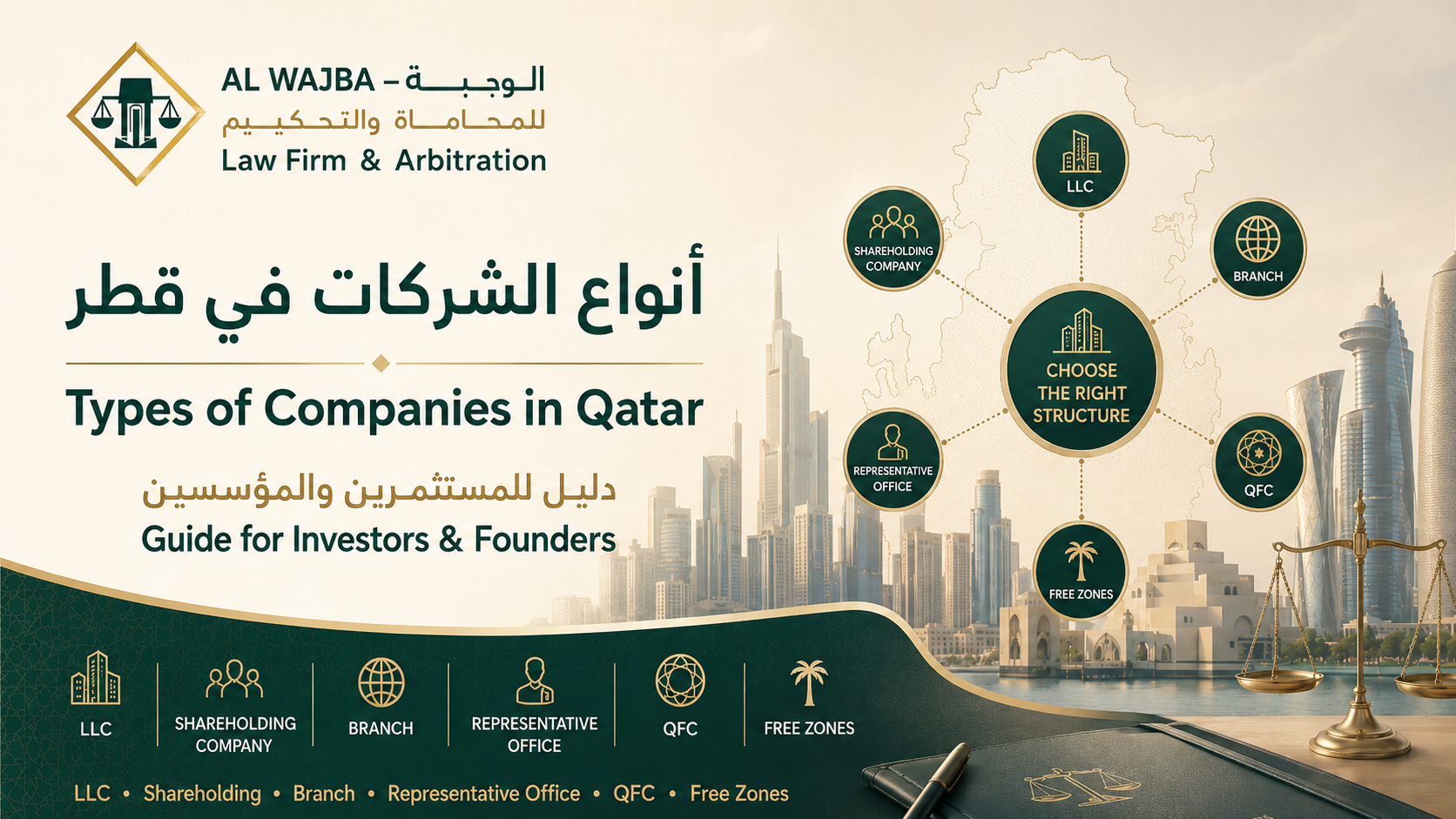
Types of Companies You Can Form in Qatar
The company type affects ownership, liability, capital requirements, documents, licensing, and operational flexibility. The table below gives a high-level comparison. A dedicated company-type guide should handle the deeper details.
| Company type | Best for | Ownership / founders | Capital note |
|---|---|---|---|
Limited Liability Company (LLC / WLL) A common structure for commercial, trading, consulting, and service activities in Qatar. | SMEs, service companies, trading businesses, and many local market operations | Usually 2–50 partners under the LLC model | MOCI states no statutory minimum capital for an LLC |
One-Person Limited Liability Company A single-owner company structure with a separate legal personality. | Solo founders and individual business owners | One owner | No statutory minimum capital stated by MOCI in the materials reviewed |
Private Shareholding Company A shareholding structure often used for larger private ventures or group-owned businesses. | Larger private ventures, family businesses, and multi-founder projects | At least 5 founding shareholders | QAR 2,000,000 minimum capital |
Public Shareholding Company A structure for larger projects operating under the public shareholding framework. | Large-scale expansion and public shareholding structures | At least 5 founders/shareholders | QAR 10,000,000 minimum capital |
Branch of a Foreign Company A route for foreign companies operating in Qatar through an approved branch pathway. | Foreign parent companies with an approved basis to operate in Qatar | One foreign parent company | Depends on the approved route and activity |
Commercial Representative Office A limited presence for promotion, marketing, and representation of a foreign company. | Market representation without direct commercial activity in Qatar | One foreign parent company | No fixed minimum stated in the MOCI materials reviewed |
QFC Company An onshore setup route under the Qatar Financial Centre for eligible activities. | Professional services, consulting, financial services, holding structures, and selected service activities | Depends on QFC rules and the selected activity | Depends on QFC licensing category and activity |
Qatar Free Zone Company A setup route through Qatar Free Zones for eligible businesses and investment projects. | Logistics, manufacturing, technology, trade, and export-oriented businesses | Depends on free-zone rules and activity approval | Depends on QFZ requirements and project type |
Mainland Company Formation
Mainland setup is often suitable for businesses that need direct local market presence, commercial registration, and activity licensing through the standard Qatari route.
QFC Company Formation
QFC can be suitable for eligible professional, consulting, financial, holding, and selected service activities under a separate onshore framework.
Qatar Free Zone Setup
Qatar Free Zones can be suitable for eligible logistics, manufacturing, technology, trade, and export-oriented projects seeking a free-zone environment.
Step-by-Step Company Formation Process in Qatar
The exact process depends on the structure and authority route, but most company formation journeys include these stages.
Define the business activity
Start by identifying the exact activity you want to conduct, because the activity affects the structure, approvals, license route, and documents.
Choose the right legal structure
Compare mainland, QFC, free-zone, LLC, branch, representative office, and shareholding options based on ownership, liability, tax, and operational goals.
Reserve the trade name
Choose a suitable trade name and reserve it through the relevant authority pathway before preparing the incorporation documents.
Prepare incorporation documents
Prepare the Articles of Association, constitutional documents, shareholder information, authorized signatory documents, and other required paperwork.
Handle translation, attestation, and notarization
Foreign-issued documents may need certification, legalization, Arabic translation, or local notarization depending on the route.
Apply for commercial registration and license
Submit the required applications to obtain the commercial registration and the relevant license based on the selected business activity.
Complete tax and authority registrations
Register with the relevant tax systems and complete any Chamber, municipality, sector, or authority-related steps where applicable.
Prepare for launch
Arrange premises, banking readiness, contracts, internal authorizations, employment needs, compliance steps, and practical operational setup.
Documents Required for Company Formation in Qatar
Common company formation document checklist
Required documents vary by company type, business activity, shareholder structure, and whether any shareholder is a foreign legal entity. The list below is a practical starting point.
- Passport copy or QID for founders, shareholders, managers, authorized signatories, and applicants as applicable
- Trade name reservation
- Business activity description
- Articles of Association, Memorandum, or constitutional documents depending on the structure
- Authorized signatory identification documents
- Power of attorney or legal procuration if a representative is acting on behalf of the founder or company
- Beneficial owner declaration or beneficial ownership information
- Corporate documents for corporate shareholders, especially foreign entities and ownership-chain documents where required
- Competent authority approval for regulated activities where applicable
- Business address or premises-related documents at the licensing stage where required
- Certified or attested foreign-issued documents and Arabic translation where required
How Much Does Company Formation in Qatar Cost?
Company formation costs in Qatar vary because each structure and activity can involve different authority fees, documents, approvals, premises requirements, and professional support needs. Instead of giving one fixed number for every case, it is better to assess these cost factors.
| Cost factor | Why it matters |
|---|---|
| Company structure | LLC, branch, QFC, QFZ, representative office, and shareholding companies can involve different authority fees and requirements. |
| Business activity | Regulated activities may require additional approvals, documents, or professional review before licensing. |
| Document preparation | Costs may include drafting, translation, attestation, notarization, and legalization of foreign documents. |
| Premises or address | Some routes require business address, office, lease, or premises-related documents before licensing is complete. |
| Government and authority fees | Commercial registration, licensing, Chamber-related fees, tax registration, and sector fees vary by route and activity. |
| Professional support | Agency, legal, accounting, or compliance support depends on the complexity of the setup and the level of assistance required. |
Foreign Ownership in Qatar
Qatar's foreign investment framework allows full foreign ownership in many sectors, subject to the applicable legal, regulatory, activity-specific, and approval requirements. For foreign investors, the key question is not only whether ownership is possible, but which route best matches the activity, control needs, liability profile, and long-term business plan.
When Legal Review Matters
Legal review becomes especially important when there are multiple shareholders, foreign corporate shareholders, regulated activities, complex management powers, commercial agency concerns, branch liability questions, or side agreements that could affect control and risk.
Common Company Formation Mistakes to Avoid
- Choosing a structure before confirming the correct business activity
- Using old minimum-capital information for LLCs without checking the current official position
- Assuming a branch office is automatically available to every foreign company
- Choosing a representative office without understanding its limits on direct commercial activity
- Ignoring sector-specific approvals until late in the process
- Starting with incomplete or unattested foreign corporate documents
- Not reviewing manager powers, authorized signatory powers, and shareholder rights before incorporation
- Treating QFC, QFZ, and mainland formation as interchangeable routes
Company Formation Agency vs Company Formation Lawyer
Many investors need both practical setup support and legal advice, but the roles are different.
Use a formation agency when you need execution
- • Document coordination and application support
- • Registration, licensing, and authority follow-up
- • Practical setup checklist and launch readiness
- • Cost-factor planning and process management
Use a lawyer when you need risk protection
- • Shareholder rights, liability, and governance review
- • Articles of Association and shareholder agreement drafting
- • Foreign ownership, branch, and regulatory risk analysis
- • Contract, compliance, and dispute-prevention advice
Official Authorities and Source Materials
Company formation in Qatar can involve different authorities depending on the selected structure and activity. These are the official sources referenced for this guide.
MOCI – Establishing Companies FAQ
MOCI – Company Types
MOCI – Joint Stock Companies Guide
MOCI – Foreign Company Branch FAQ
MOCI – Commercial Representative Office Rules
Invest Qatar – Investment Laws
Qatar Financial Centre
Qatar Free Zones
Dhareeba Portal
General Tax Authority
Company Formation in Qatar FAQ
What is company formation in Qatar?
Company formation in Qatar is the process of choosing a suitable legal structure, preparing incorporation documents, obtaining commercial registration and licensing, completing tax or authority registrations where applicable, and preparing the business to operate legally.
What is the most common company type in Qatar?
The Limited Liability Company, often referred to as an LLC or WLL, is one of the most common structures for many commercial and service activities in Qatar. The best structure still depends on the business activity, ownership plan, and registration route.
Can foreigners own 100% of a company in Qatar?
Qatar's foreign investment framework allows full foreign ownership in many sectors, subject to the applicable legal, regulatory, activity-level, and approval requirements. The exact route should be checked based on the activity and intended structure.
How long does company formation in Qatar take?
The timeframe varies depending on the company type, authority route, activity, document completeness, translation or attestation requirements, and whether additional approvals are required. It is better to treat timing as case-dependent rather than fixed for every company.
What documents are required to form a company in Qatar?
Common documents include founder identification, trade name reservation, business activity details, incorporation documents, authorized signatory information, beneficial ownership information, powers of attorney where applicable, corporate shareholder documents, and attested or translated foreign documents where required.
Is there a minimum capital requirement for an LLC in Qatar?
MOCI states that there is no statutory minimum capital for an LLC. Other structures can have different capital requirements, including private and public shareholding companies.
Should I use a company formation agency or a lawyer?
A company formation agency is useful for practical setup support, registration coordination, documentation, and launch readiness. A company formation lawyer is especially important when ownership, liability, shareholder rights, regulated activities, contracts, or legal risk need deeper review.
What is the difference between mainland, QFC, and Qatar Free Zone setup?
Mainland formation is generally handled through the standard commercial registration and licensing route. QFC is a separate onshore framework for eligible activities. Qatar Free Zones are designed for eligible investment projects, often involving logistics, manufacturing, technology, trade, or export-oriented activity. The right choice depends on the business model and activity.
Need Help Forming a Company in Qatar?
We can help you understand the right structure, prepare the required documents, coordinate registration, and review legal risks before you start operating.
About the Author
Written by Mr. Arqam Abdelqader — Sudanese Lawyer in Qatar. A Sudanese lawyer registered with the Sudanese Bar Association and the Qatari Ministry of Justice, with legal experience in Sudan, Kuwait, and Qatar. He specializes in family, criminal, corporate, and labor law.
Need Legal Consultation?
Our team of specialized lawyers is ready to assist you with all your legal matters.
Contact Us Now