Qatar Free Zone Company Setup: Complete Guide for Investors
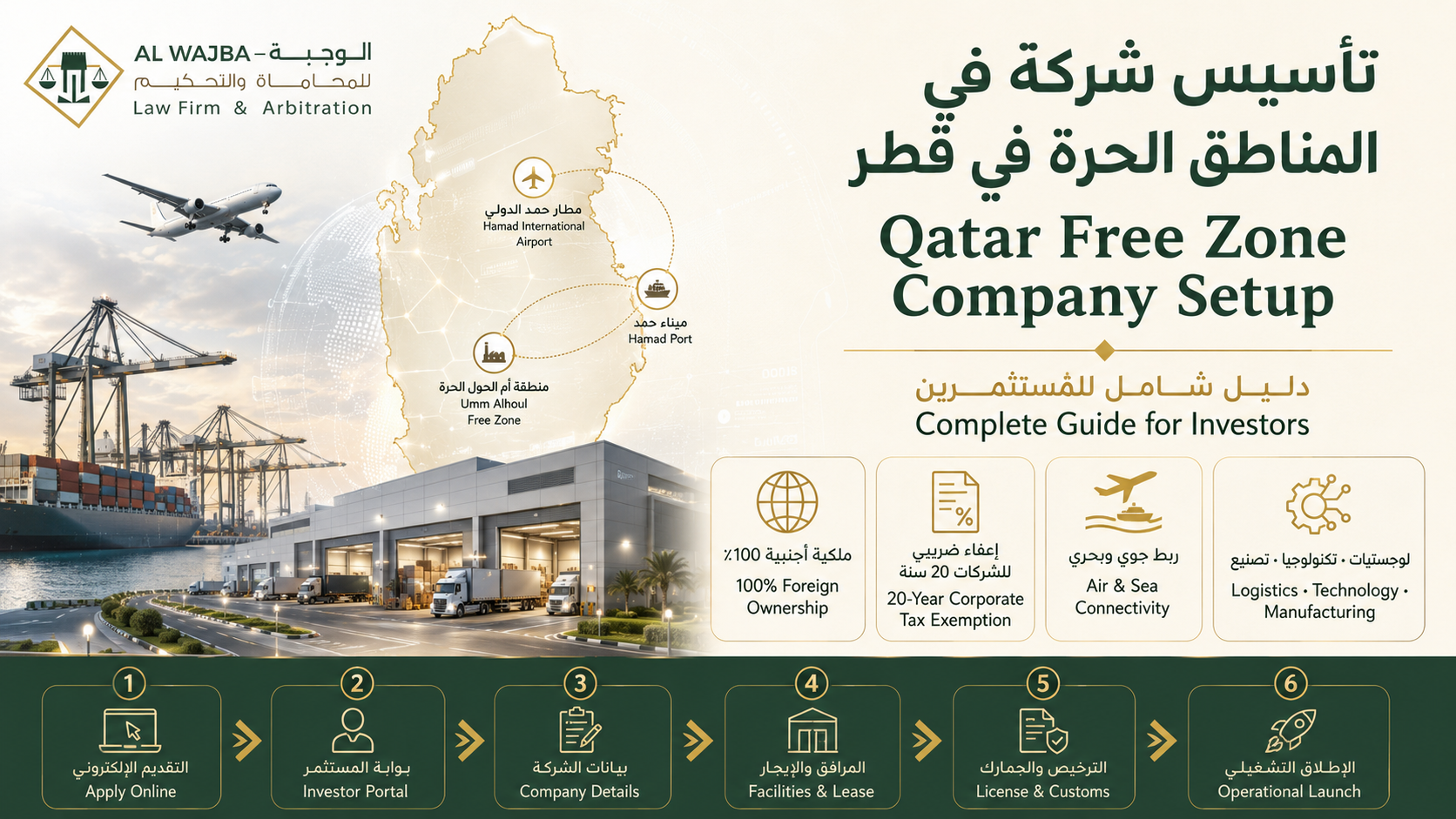
Qatar Free Zone Company Setup: Complete Guide for Investors
Qatar Free Zone company setup can be a strong route for eligible logistics, trading, manufacturing, technology, maritime, warehousing, re-export, and export-oriented businesses. This guide explains what Qatar Free Zones are, who they suit, the setup process, documents, cost factors, customs points, benefits, and when legal review is important before registration.
Related Company Formation Guides and Services
Explore related guides and legal services for company formation in Qatar.
The main guide covering company types, setup process, documents, costs, and Qatar formation routes.
End-to-end setup support for registration, documents, licensing, tax, and launch readiness.
Legal structuring, shareholder agreements, Articles of Association, risk review, and compliance.
A detailed comparison of LLCs, shareholding companies, branches, representative offices, and other structures.
A focused guide for limited liability company setup in Qatar.
A focused guide for eligible businesses setting up through Qatar Financial Centre.
A focused guide for businesses considering Qatar Free Zones.
A focused guide for foreign companies opening a branch in Qatar.
A focused guide for foreign companies opening a commercial representation office.
Corporate legal advice for contracts, governance, compliance, and business operations.
Quick answer: what is Qatar Free Zone company setup?
Qatar Free Zone company setup is the process of registering and licensing an eligible business through Qatar Free Zones Authority, often for logistics, trading, manufacturing, technology, maritime, warehousing, re-export, and export-oriented operations.
- Qatar Free Zones are best considered when the activity fits QFZ's sector focus and operating model.
- The official setup flow is built around applying online, defining the company, and launching the business.
- QFZ can offer benefits such as 100% foreign ownership, full capital repatriation, tax incentives, and customs-related advantages.
- Ras Bufontas and Umm Alhoul support different airport, seaport, logistics, industrial, technology, and maritime use cases.
- A free-zone company is not automatically the same as a mainland company, especially for local-market trading and customs treatment.
Qatar Free Zones for Eligible High-Growth Businesses
A setup route for companies that need strategic infrastructure, global connectivity, and a free-zone operating environment.
Best for
Logistics, trading, warehousing, manufacturing, technology, maritime, re-export, and export-oriented projects.
Main advantage
Free-zone benefits, investor support, strategic air and sea connectivity, and sector-focused infrastructure.
Key risk
Choosing QFZ before confirming activity eligibility, local-market needs, customs treatment, and facility requirements.
Why Investors Choose Qatar Free Zones
Qatar Free Zones can be attractive when the company needs a free-zone environment, export readiness, logistics access, facilities, incentives, and investor support.
100% Foreign Ownership
Qatar Free Zones can be attractive for foreign investors because QFZ materials describe 100% foreign ownership as one of the investor benefits, subject to approval and the selected activity.
Tax and Customs Incentives
QFZ highlights competitive incentives, including 20-year corporate tax exemptions, zero individual income taxes, and zero customs duties on imports into the free zones.
Air and Sea Connectivity
Qatar Free Zones are positioned around Ras Bufontas Free Zone near Hamad International Airport and Umm Alhoul Free Zone near Hamad Port, supporting air, sea, logistics, and export operations.
Purpose-Built Infrastructure
QFZ offers business, logistics, industrial, technology, and maritime infrastructure designed for companies that need operational facilities, land, offices, or light industrial units.
Sector-Focused Ecosystem
QFZ focuses on sectors such as logistics and trading, emerging technologies, industrial and consumer activities, maritime, and diamonds and precious stones.
Investor Support Journey
QFZ describes an onboarding journey involving business development, investor relations, licensing, registration, lease arrangements, customs, permits, and operational readiness.
Who Is Qatar Free Zone Company Setup Suitable For?
QFZ is strongest where the activity and operating model fit the free-zone environment. The key question is whether the business needs logistics, infrastructure, export, warehousing, manufacturing, technology, or specialized free-zone support.
| Sector or activity | Examples | Practical note |
|---|---|---|
| Logistics and Trading | Warehousing, third-party logistics, e-commerce fulfillment, distribution centers, re-export, high-value goods storage, and import-export operations | QFZ is especially relevant when the business needs direct access to air or sea logistics infrastructure and international trade flows. |
| Manufacturing and Industrial Activities | Light manufacturing, advanced materials, food ingredients, industrial services, chemicals-related activities, and production facilities | Umm Alhoul Free Zone may be relevant for industrial operations needing land, port access, utilities, or specialized infrastructure. |
| Emerging Technologies | Artificial intelligence, data analytics, cloud computing, cybersecurity, robotics, IoT, drones, clean technology, VR/AR, and e-commerce | QFZ can fit technology businesses that need regional operations, digital infrastructure, logistics support, or access to Qatar's innovation ecosystem. |
| Maritime and Marine Services | Ship repair, maritime services, boat brokerage, marine research, vessel-related support, and Marsa maritime cluster activities | Marsa Maritime in Umm Alhoul Free Zone is designed as a marine ecosystem near Hamad Port. |
| Diamonds and Precious Stones | Trading, storage, certification support, secure movement, logistics, and high-value precious-stone ecosystem services | This is a specialized QFZ sector and should be reviewed carefully for customs, security, certification, and regulatory requirements. |
| Not Every Local-Market Business | Local retail shops, restaurants, unrestricted Qatar mainland trading, and businesses mainly serving walk-in local customers | A mainland company, QFC company, or another route may be more suitable if the business model is mainly local-market commercial activity. |
Qatar Free Zone Company Setup Process
Confirm whether Qatar Free Zones fit your business
Start by checking whether your activity, logistics model, customer market, facility needs, and import-export profile fit Qatar Free Zones rather than mainland or QFC company formation.
Apply online through the investor route
QFZ describes the first stage as applying online by submitting contact details to receive Investor Portal login credentials and begin the setup process.
Define the company and business activity
Submit company details, proposed business activities, ownership information, preferred real estate requirements, and the operational model for QFZ review.
Coordinate with business development and investor relations
QFZ's onboarding journey involves business development, investor relations, and regulations teams working through application assessment, property terms, visa allocations, entity registration, lease arrangements, and licensing.
Prepare incorporation and licensing documents
Prepare shareholder information, beneficial ownership details, corporate documents, authorized signatory details, activity description, lease or facility documents, and other required materials.
Complete registration, lease, and license steps
The company setup normally moves through registration, lease signing, license issuance, and confirmation that the company meets QFZ regulatory and operational requirements.
Handle visas, QID, banking, and operational setup
After the initial setup is approved, investor relations may support business and work visas, QID, bank account setup, and other practical operational readiness steps.
Prepare for customs, permits, and launch
Depending on the facility and activity, the final stage may include asset handover, environment permits, building permits, customs registration, property management, technology services, and launch readiness.
Qatar Free Zone vs Mainland vs QFC Company Formation
Qatar Free Zone setup should be compared with mainland and QFC company formation before documents are prepared. Each route has a different purpose, authority, market fit, and compliance profile.
| Route | Authority route | Usually best for | Ownership note | Key caution |
|---|---|---|---|---|
| Qatar Free Zone Company Setup | Qatar Free Zones Authority | Logistics, trading, warehousing, manufacturing, technology, maritime, re-export, and export-oriented projects | QFZ materials describe 100% foreign ownership as an investor benefit | Best suited to businesses that fit QFZ's sector focus, facility model, and free-zone operating framework. |
| Mainland Company Formation | Usually MOCI and other competent authorities depending on activity | Businesses needing direct mainland market operations, local commercial licensing, retail, contracting, services, or ordinary Qatar commercial presence | Depends on the activity, structure, foreign investment rules, and approvals | May be better for unrestricted local market activity but can involve different ownership, premises, municipality, and sector approval requirements. |
| QFC Company Formation | Qatar Financial Centre Authority / CRO, with QFCRA involvement for regulated financial services | Eligible professional services, consulting, financial services, tech, holding, headquarters, and selected service activities | Up to 100% foreign ownership may be available under the QFC framework | Activity must fit QFC's permitted-activity framework and the firm must comply with its Scope of License. |
Documents Required for Qatar Free Zone Company Setup
QFZ setup document checklist
The exact documents depend on the activity, shareholders, facility type, customs needs, and whether foreign corporate documents are involved. Use this list as a practical starting point.
- Passport copy or QID for shareholders, directors, managers, authorized signatories, and applicants as applicable
- Corporate shareholder documents if a company will own the QFZ entity
- Ownership-chain information and ultimate beneficial owner details
- Business activity description and explanation of the intended operating model
- Application inquiry details and investor information requested through the QFZ portal
- Proposed company structure, shareholding percentages, governance details, and signing authority information
- Business plan, project profile, or operational summary where requested
- Real estate or facility requirements, such as office, warehouse, land, light industrial unit, or other premises needs
- Lease-related documents or property terms where applicable
- Visa allocation and staffing information where relevant
- Customs, import-export, storage, insurance, or transport information where applicable
- Foreign-issued corporate documents that may require certification, legalization, translation, or corporate approval evidence
How Much Does Qatar Free Zone Company Setup Cost?
Qatar Free Zone setup costs vary by activity, facility type, lease terms, documentation, staffing, customs needs, permits, and launch requirements. A fixed budget should not be assumed until the activity and operating model are confirmed.
Business activity and sector
A logistics, manufacturing, trading, technology, maritime, or specialized precious-stones project can involve different review, facility, and compliance requirements.
Facility type
Office, warehouse, land, light industrial unit, built facility, or specialized premises needs can significantly affect the overall setup budget.
Lease and property terms
QFZ setup may involve property terms and lease arrangements as part of the onboarding journey, depending on the selected business model.
Document preparation
Costs may include drafting, shareholder documents, corporate resolutions, powers of attorney, legalization, translation, and professional review.
Customs and logistics readiness
Import-export businesses may need customs system registration, transport arrangements, insurance, inventory controls, and operational procedures.
Permits and launch requirements
Some companies may need environmental permits, building permits, asset handover, property management, security access, and other approvals before launch.
When Legal Review Matters for Qatar Free Zone Setup
Qatar Free Zone setup is not only a licensing exercise. Legal review helps protect the investor before lease commitments, customs activity, facility obligations, and operating decisions are finalized.
Route Selection
Confirm whether QFZ is better than mainland, QFC, branch, representative office, or another route for the exact business activity and market plan.
License and Activity Scope
The company should be licensed for the actual activities it will perform, especially where import-export, storage, production, or regulated goods are involved.
Ownership and Governance
Review shareholder rights, director powers, manager authority, authorized signatories, corporate approvals, and future amendment procedures.
Customs and Local-Market Risk
Goods entering or leaving the free zones, or goods sold into mainland Qatar, may trigger customs, documentation, and procedure requirements.
Lease and Facility Commitments
Real estate terms, land or warehouse commitments, construction requirements, insurance, utilities, and access rules should be reviewed before signing.
Post-Setup Compliance
Plan company renewals, license conditions, customs registrations, permits, staff access, insurance, reporting, and operational compliance before launch.
Customs and Operational Readiness in Qatar Free Zones
Import and export readiness
A QFZ company may need customs system registration, transport arrangements, inventory controls, and documentation before importing or exporting goods.
Mainland sales treatment
Goods sold into Qatar's mainland market may be subject to ordinary customs procedures, so the business model should be reviewed before launch.
Facility and access requirements
Warehouses, industrial units, staff, vehicles, security access, permits, insurance, and property management steps should be planned early.
Common Qatar Free Zone Setup Mistakes to Avoid
- Choosing Qatar Free Zones only because of incentives, without checking whether the business activity and operating model fit the free-zone framework
- Assuming a free-zone company is the same as a mainland company for local-market trading
- Ignoring customs procedures when goods are imported, stored, processed, re-exported, or sold into mainland Qatar
- Starting the application before confirming the right facility type, such as office, warehouse, land, or light industrial unit
- Treating QFZ, QFC, and mainland company formation as interchangeable routes
- Not preparing corporate shareholder, ownership-chain, and beneficial ownership documents early enough
- Failing to review lease, property, insurance, building, environmental, or access requirements before launch
- Assuming every business activity qualifies automatically for Qatar Free Zones approval
- Not reviewing manager powers, signatory authority, shareholder rights, and internal governance before registration
- Forgetting post-setup requirements such as visas, QID, bank account setup, customs registration, permits, and operational readiness
Official Qatar Free Zone Sources and Authorities
Qatar Free Zone company setup should be checked against official QFZ materials, current investor requirements, applicable laws, and the requirements that apply to the selected activity and facility model.
Qatar Free Zones – Home
Qatar Free Zones Authority
QFZ – Free Zones
QFZ – Business Friendly
QFZ – Sectors
QFZ – Logistics & Trading
QFZ – Emerging Technologies
QFZ – Industrial & Consumer
QFZ – Set Up a New Company
QFZ – FAQ
QFZ – Laws
Qatar Free Zone Company Setup FAQ
What is Qatar Free Zone company setup?
Qatar Free Zone company setup is the process of registering and licensing a business through Qatar Free Zones Authority for eligible activities. It is commonly considered for logistics, trading, manufacturing, technology, maritime, warehousing, re-export, and export-oriented projects.
Is Qatar Free Zone setup the same as mainland company formation?
No. Qatar Free Zone setup is handled through Qatar Free Zones Authority and is designed for eligible free-zone projects. Mainland company formation usually follows the standard commercial registration and licensing route through the relevant Qatari authorities. The right route depends on activity, market, facility needs, and operating model.
Is Qatar Free Zone setup the same as QFC company formation?
No. QFC is an onshore business and financial centre for eligible activities such as professional services, consulting, financial services, holding, and selected service activities. Qatar Free Zones are a different route, often better suited to logistics, manufacturing, technology, maritime, warehousing, trading, and export-oriented operations.
Can foreigners own 100% of a Qatar Free Zone company?
QFZ official materials describe 100% foreign ownership as one of the investor benefits. The exact position still depends on approval, activity, structure, documentation, and the terms of the issued license.
What are the main benefits of setting up in Qatar Free Zones?
Commonly highlighted QFZ benefits include 100% foreign ownership, full capital repatriation, 20-year corporate tax exemptions, zero individual income taxes, zero customs duties on imports into the free zones, access to air and sea logistics infrastructure, and investor support through the setup journey.
What activities are suitable for Qatar Free Zones?
Qatar Free Zones may suit logistics, trading, warehousing, distribution, re-export, e-commerce fulfillment, manufacturing, industrial services, emerging technologies, maritime, and selected specialized sectors such as diamonds and precious stones. The activity should be checked against QFZ's current sector focus and approval requirements.
What is the Qatar Free Zone setup process?
The setup process usually starts with applying online, submitting company and activity details, selecting real estate or facility requirements, coordinating with QFZ business development and investor relations, completing registration and licensing, signing lease arrangements where applicable, and preparing for operational launch.
What documents are required for Qatar Free Zone company setup?
Common documents include shareholder identification, corporate shareholder documents, ownership-chain and beneficial ownership information, business activity details, company structure information, signatory details, business plan or project profile, facility requirements, lease-related documents, and customs or operational information where relevant.
Can a Qatar Free Zone company import and export goods?
QFZ materials state that the relevant license and certificate of incorporation can allow a company to register on the QFZ customs system and import and export as required. Goods sold into mainland Qatar may be subject to regular customs procedures.
Do I need a lawyer for Qatar Free Zone company setup?
Legal review is recommended when the project involves foreign corporate shareholders, complex ownership, significant lease or facility commitments, customs and import-export operations, manufacturing or regulated goods, multiple shareholders, financing, investor rights, or uncertainty about whether QFZ is the correct route.
Need Help With Qatar Free Zone Company Setup?
We can help you assess whether Qatar Free Zones are the right route, review activity and facility requirements, prepare legal documents, structure ownership and signing powers, and reduce compliance risk before registration and licensing.
About the Author
Written by Mr. Arqam Abdelqader — Sudanese Lawyer in Qatar. A Sudanese lawyer registered with the Sudanese Bar Association and the Qatari Ministry of Justice, with legal experience in Sudan, Kuwait, and Qatar. He specializes in family, criminal, corporate, and labor law.
Need Legal Consultation?
Our team of specialized lawyers is ready to assist you with all your legal matters.
Contact Us Now